When people think about asbestos exposure, they often picture it effecting only male workers in construction, mining or manufacturing. But the reality is much broader.
Across Asia and the Pacific, where asbestos-containing materials are still manufactured and used, many types of workers are at risk. Women, migrant workers, informal workers, children, older people, and persons with disabilities are affected by asbestos exposure, often outside formal employment settings, including domestic and care environments, community infrastructure, and disaster response and recovery.
Despite this, in many countries, asbestos continues to be treated only as an occupational health and safety issue. That narrow focus leaves many people invisible.
The Global Burden of Disease 2019 estimates that up to 10% of asbestos-related diseases worldwide are linked to non-occupational exposure. Yet these exposures can go unrecognised by existing regulations and health monitoring systems, meaning many cases go undetected and unreported.
To better understand these hidden impacts, Union Aid Abroad–APHEDA recently undertook a Gender Equality, Disability and Social Inclusion (GEDSI) Analysis as part of the Asbestos. Not Here. Not Anywhere campaign. The analysis explored how gender and other social factors influence asbestos exposure and vulnerability across Thailand, Vietnam, Malaysia, Indonesia, the Philippines and Fiji.
The findings were clear: women, migrants, informal sector workers, and people with disabilities are exposed differently to asbestos risks but are commonly overlooked.
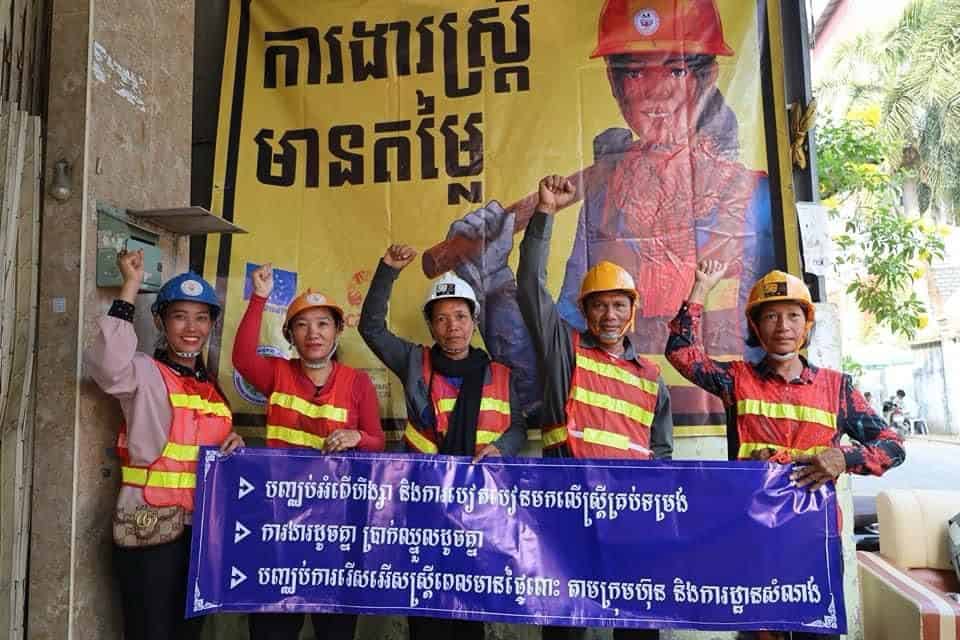
Women often experience asbestos exposure through unpaid care work, domestic environments, community infrastructure and informal employment, where health protections are weakest or non-existent. Migrant workers, informal workers, children, older people and people with disability are also disproportionately affected through exposure pathways that are largely absent from policy and regulatory responses.
Because asbestos-related diseases can take decades to develop, the connection between exposure and illness is frequently missed. This contributes to widespread under-diagnosis, limited data and weak accountability, particularly for people exposed outside formal workplaces.
The analysis also identified common challenges across the region. Occupational health and safety systems remain narrowly focused on formal employment, while many countries rely heavily on informal and migrant labour. Weak surveillance systems mean the true scale of exposure is often unknown. At the same time, the asbestos industry continues to spread misinformation, downplay the risks of non-occupational exposure, contest health evidence, and undermine efforts to strengthen public health protections.
Our findings reinforce why eliminating asbestos requires more than workplace regulation. It demands a whole-of-society approach that recognises the different ways people are exposed throughout their lives.
As part of the campaign, Union Aid Abroad-APHEDA has identified six priority areas to help build a more inclusive response:
- reframing asbestos as a societal and public health issue
- strengthening inclusion within occupational health and safety systems
- broadening partnerships and collaborative networks to reflect the full exposure environment
- advocating for extending protection beyond formal workplaces to informal, care, and disaster contexts
- strengthening intersectional evidence and data; and
- building grassroots awareness, voice, and collective agency.
We are working alongside unions and community partners across the region to turn these priorities into practical action. By placing gender equality, disability inclusion and social justice at the centre of the campaign, we can build stronger protections, amplify the voices of those most affected, and move closer to a future where asbestos is not here, not anywhere.
Keen to support our work? The best way is to become a member of Union Aid Abroad–APHEDA at www.apheda.org.au/join
The Asbestos. Not Here. Not Anywhere. campaign is supported by the Australian Government through the Department of Foreign Affairs and Trade.